What is Generative AI? A Complete Generative AI Guide 2026
By Ankit Singh Full Stack Developer | April 15, 2026 | 15 min read
If you've been hearing about AI everywhere and wondering what is generative AI, you're not alone. I remember the first time I saw AI generate human-like text—it felt unreal.
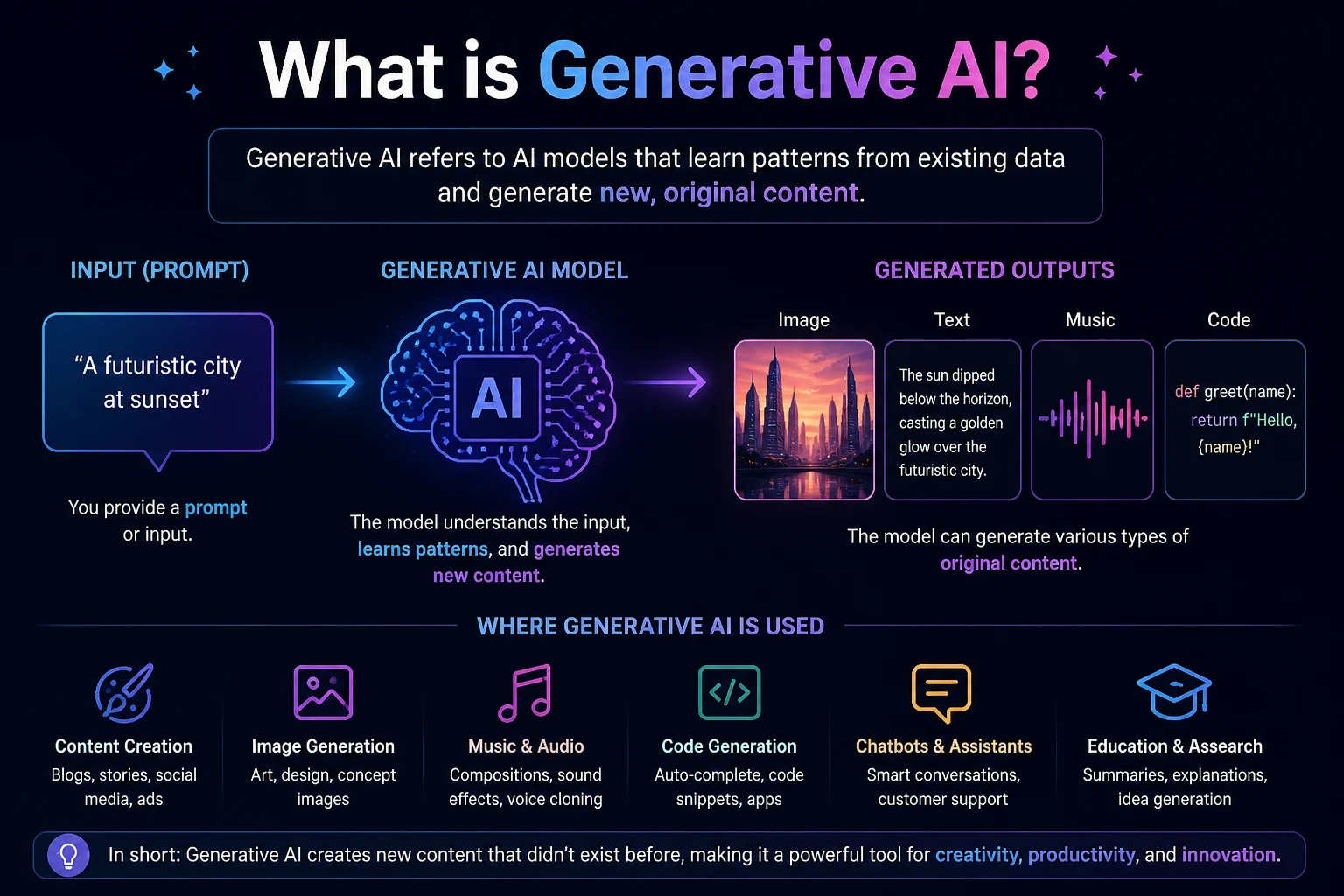
In simple terms, generative AI is a type of artificial intelligence that can create content—text, images, videos, even code. But there's much more happening behind the scenes, and that's exactly what you'll understand in this guide.
What is Generative AI Meaning? (Simple Explanation)
So what does generative AI actually mean? Think of it like this—you give instructions, and the AI creates something new instead of just showing existing information.
Unlike traditional AI, which analyzes data, generative AI builds things from scratch. That’s the key difference.
In my experience, this is where most beginners get confused. They assume AI is just about automation. But generative AI is more like a creator than a helper.
How Generative AI Works Behind the Scenes
Ever wondered how AI writes like a human or generates realistic images? It’s not magic—it’s data and patterns.
1. Training on Massive Data
Generative AI models are trained on huge datasets—books, websites, images. This helps them understand patterns.
2. Neural Networks
They use advanced neural networks (like transformers) to predict what comes next—word by word or pixel by pixel.
3. Output Generation
When you type a prompt, the AI predicts the best possible output based on training.
What most guides miss is this: AI doesn’t “think.” It predicts patterns extremely well.
Generative AI Examples You Already Use
You might already be using generative AI without realizing it.
Example 1: Chatbots
Tools like AI chat assistants can write blogs, emails, and code.
Example 2: Image Generators
AI can create realistic images from text prompts.
Example 3: Code Generation
Developers now use AI to write and debug code faster.
I’ve personally used AI to speed up development work—it saves hours, no exaggeration.
Best Generative AI Tools in 2026
Let’s be practical—what tools should you actually use?
- ChatGPT – Content & coding
- Midjourney – Image generation
- DALL·E – Creative visuals
- GitHub Copilot – Coding assistant
You don’t need all of them. Start with one, master it, then expand.
Generative AI Use Cases in Real Life
Where is generative AI actually useful? Almost everywhere.
1. Content Creation
Blog writing, social media posts, SEO content—you name it.
2. Business Automation
Customer support, emails, reports.
3. Legal & Finance
Drafting documents, analyzing contracts.
Case Study
A small startup used generative AI to reduce content costs by 70%. That’s huge.
Future of Generative AI (What’s Coming Next?)
Here’s the exciting part—the future.
AI is evolving fast. We’re moving toward:
- AI video generation
- Fully automated businesses
- AI-powered personal assistants
But there’s a flip side too—job shifts, ethical concerns, and regulation.
If you’re thinking long-term, learning AI now is not optional—it’s survival.