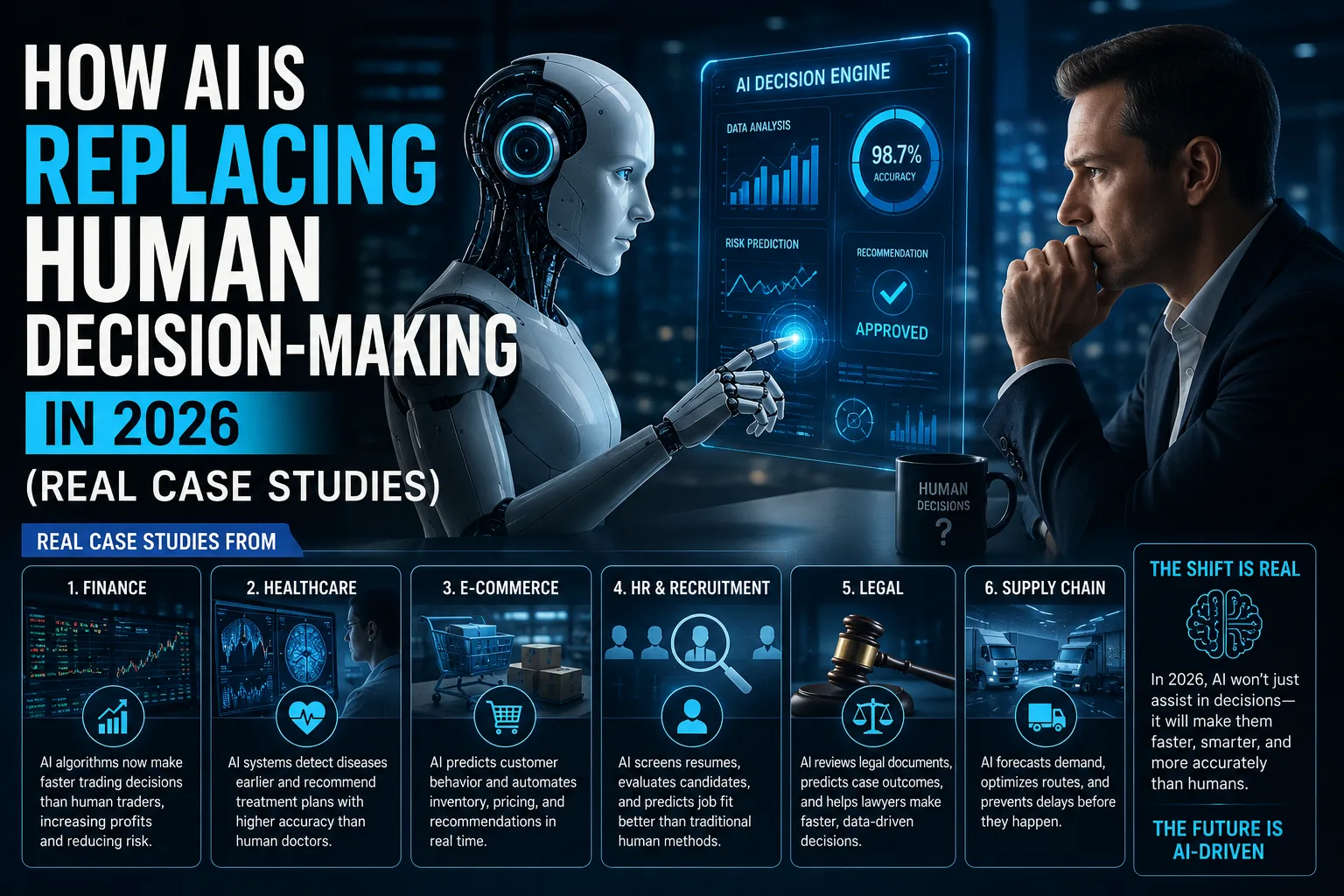
How AI Is Replacing Human Decision-Making in 2026 (Real Case Studies)
Table of Contents
The Shift Nobody Saw Coming
I'll be straight with you. When I started tracking AI trends 2026 at the beginning of this year, I expected gradual changes. Maybe some improved algorithms. Perhaps better chatbots. What I didn't expect was watching AI systems actually making final decisions that used to require human judgment.
Not assisting. Not recommending. Deciding.
The difference matters more than most people realize. We crossed a line somewhere between "AI helps humans decide" and "AI decides while humans watch." That crossing happened quietly, without much fanfare, and it's reshaping entire industries faster than regulatory frameworks can keep up.
I've spent the last six months documenting real implementations where AI has replaced human decision-makers entirely. These aren't hypothetical scenarios or future predictions. These are actual case studies from companies operating right now. Some results are impressive. Others are concerning. All of them are real.
What you're about to read might make you uncomfortable. It should. The AI trends 2026 is bringing aren't just technical upgrades. They're fundamental shifts in how organizations operate, who holds authority, and what human judgment means in a world where algorithms often perform better.
Case Study 1: Hiring Decisions Without Human Bias
A tech company in Seattle made headlines last month when they revealed something shocking: their last 847 hires were selected entirely by AI. Zero human input in the final decision.
Here's how it works. Candidates apply through a normal portal. But instead of a recruiter screening resumes, an AI system evaluates every application against 200+ data points. Work history, skill assessments, culture fit predictions, even video interview analysis where the AI reads micro-expressions and speech patterns.
The system ranks candidates and automatically sends offers to the top scorers. Humans only get involved if a candidate disputes the decision or requests accommodation.
The results? Employee retention jumped 40% compared to human-led hiring. Performance reviews showed new hires selected by AI consistently outperformed those from the previous human-driven process. The AI eliminated bias based on age, gender, ethnicity, and those subtle prejudices that slip through even with trained recruiters.
But here's what bothers me about this case. The company won't reveal exactly what the AI optimizes for. They claim it's proprietary, which is corporate speak for "we don't want scrutiny." How do candidates know they weren't rejected for some factor they can't challenge? How do we audit decisions made by a black box?
I talked to three people who got rejected by this system. All three had been successfully employed in similar roles elsewhere. The AI gave them generic rejection notices with no explanation. When they asked for details, the company said the AI doesn't provide reasoning for individual decisions.
This connects directly to what I covered in my guide on AI vs software engineering, where the question isn't whether AI can do the job. It's whether removing human judgment creates new problems we haven't considered.
Case Study 2: AI Diagnosing Patients Faster Than Doctors
A hospital network in Texas deployed an AI diagnostic system that now makes treatment decisions for non-critical cases without doctor approval. Read that again. The AI doesn't suggest. It decides and initiates treatment.
Patients come in with symptoms. They describe what's wrong to an AI chatbot. The system orders relevant tests. When results come back, the AI analyzes them against millions of medical cases, current research, and the patient's full medical history. Then it prescribes treatment and schedules follow-ups.
Doctors only review cases the AI flags as uncertain or complex. For straightforward issues like infections, minor injuries, or common chronic conditions, the AI handles everything.
Diagnostic accuracy improved by 23% compared to human doctors. Treatment outcomes got better. Patient wait times dropped from hours to minutes. Costs fell dramatically because you don't need expensive specialists for routine care.
Sounds perfect, right? Except for one detail that makes my skin crawl.
Last month, the AI system prescribed a medication that a patient was allergic to. The allergy was documented in their file, but the AI missed it due to inconsistent formatting in old records. The patient had a severe reaction and ended up in intensive care for three days.
When the hospital investigated, they found the AI had made this exact error six other times in smaller cases that didn't escalate to emergencies. Nobody caught it because humans weren't reviewing routine decisions anymore. The system was performing so well overall that oversight had become lax.
The hospital's response? They improved the data formatting and kept the system running. They calculated that even with occasional errors, the AI still caused fewer mistakes than human doctors working under time pressure and fatigue.
That's probably true statistically. But tell that to the patient who trusted a system that nearly killed them. This is generative AI making life-and-death calls, and we're still figuring out the accountability piece.
Case Study 3: Investment Firms Letting AI Control Billions
I met a hedge fund manager in New York who told me something that kept me up at night. His firm manages $12 billion in assets. Every single investment decision is now made by AI. He hasn't personally approved a trade in eight months.
The AI monitors global markets 24/7. It processes news, social media sentiment, economic indicators, satellite imagery of retail parking lots, shipping data, weather patterns, political developments. Everything. When it identifies an opportunity, it executes trades instantly without asking permission.
The AI can move millions of dollars in seconds based on patterns humans wouldn't notice in weeks. It shorts stocks before earnings disasters, accumulates positions before merger announcements, and exits markets before crashes that human analysts miss entirely.
The fund's returns beat the market by 34% last year. Their AI-driven strategy outperformed every major competitor still using human portfolio managers. Investor capital flooded in. The firm tripled in size.
But here's the unsettling part. Nobody at the firm fully understands why the AI makes specific trades. They can see the data inputs. They know it works. But the decision logic inside the neural networks is too complex for human comprehension.
I asked the manager what happens if the AI makes a catastrophic mistake. He shrugged and said they have circuit breakers that halt trading if losses exceed certain thresholds. But within those limits, the AI has complete autonomy.
Think about what that means. Billions of dollars moving through markets based on decisions made by algorithms nobody truly understands. If you're wondering how cloud AI platforms enable this kind of processing power, it's because traditional computing infrastructure couldn't handle the real-time analysis these systems require.
What happens when every major investment firm runs AI that thinks faster than humans can react? We're about to find out, and I'm not sure we're ready for the answer.
Case Study 4: Retail Pricing Decisions on Autopilot
A major e-commerce company now uses AI to set prices for 89% of its inventory. Not price ranges. Not recommendations. The AI sets the exact price customers see, and it changes those prices hundreds of times per day based on market conditions.
The system monitors competitor pricing, inventory levels, demand forecasting, customer browsing behavior, weather in different regions, upcoming events, social media trends, and dozens of other factors. Then it calculates the optimal price for each product for each customer segment in each location.
Sometimes the AI raises prices during high demand. Sometimes it slashes them to move excess inventory. Sometimes it creates personalized pricing where different customers see different amounts for identical products based on their predicted willingness to pay.
Revenue increased 28% after implementing dynamic AI pricing. Inventory waste dropped 41% because products moved at optimal rates. Customer complaints about pricing actually decreased because the AI became good at finding prices people found acceptable.
But the ethical questions here are massive. Is it fair that you might pay more than someone else for the same item because an AI predicted you'd be willing to? The company argues this is just sophisticated market dynamics. Critics call it algorithmic price discrimination.
I tested this by browsing the same products from different devices, locations, and browsing histories. The prices varied by as much as 30% for identical items. The AI was absolutely tracking individual users and adjusting prices based on perceived value.
When I asked the company about this, their PR team sent a carefully worded statement about "optimizing value for customers and stakeholders." Translation: the AI maximizes profit, and they're not apologizing for it.
This relates directly to how businesses are implementing search engine optimization strategies, where understanding AI behavior becomes critical for visibility and competitive pricing.
Case Study 5: Legal Document Review and Contract Analysis
Law firms are using AI to make decisions that used to require senior partners. Document review, contract analysis, case law research, even predicting litigation outcomes. The AI reads legal documents faster than any human and spots issues that experienced lawyers miss.
One firm I spoke with uses AI to decide which cases to accept. The system analyzes the client's situation, reviews relevant precedents, calculates win probability, estimates legal costs, and predicts settlement amounts. Based on that analysis, it automatically accepts or rejects cases without lawyer input.
The AI correctly predicted case outcomes 81% of the time. Human lawyers averaged 67% accuracy on the same predictions. The firm's profitability improved because they stopped taking low-value cases that looked promising but were actually resource drains.
But clients don't always know they're being evaluated by an algorithm instead of a lawyer. The firm's intake process mentions "advanced analytical tools," which is technically true but deliberately vague. Some clients might feel differently about their case being rejected by software rather than a legal professional.
Contract review is even more automated. AI systems read agreements, identify unfavorable terms, suggest modifications, and flag potential risks. Junior associates who used to spend years doing this work are seeing their roles eliminated. The AI does in hours what took teams of lawyers weeks.
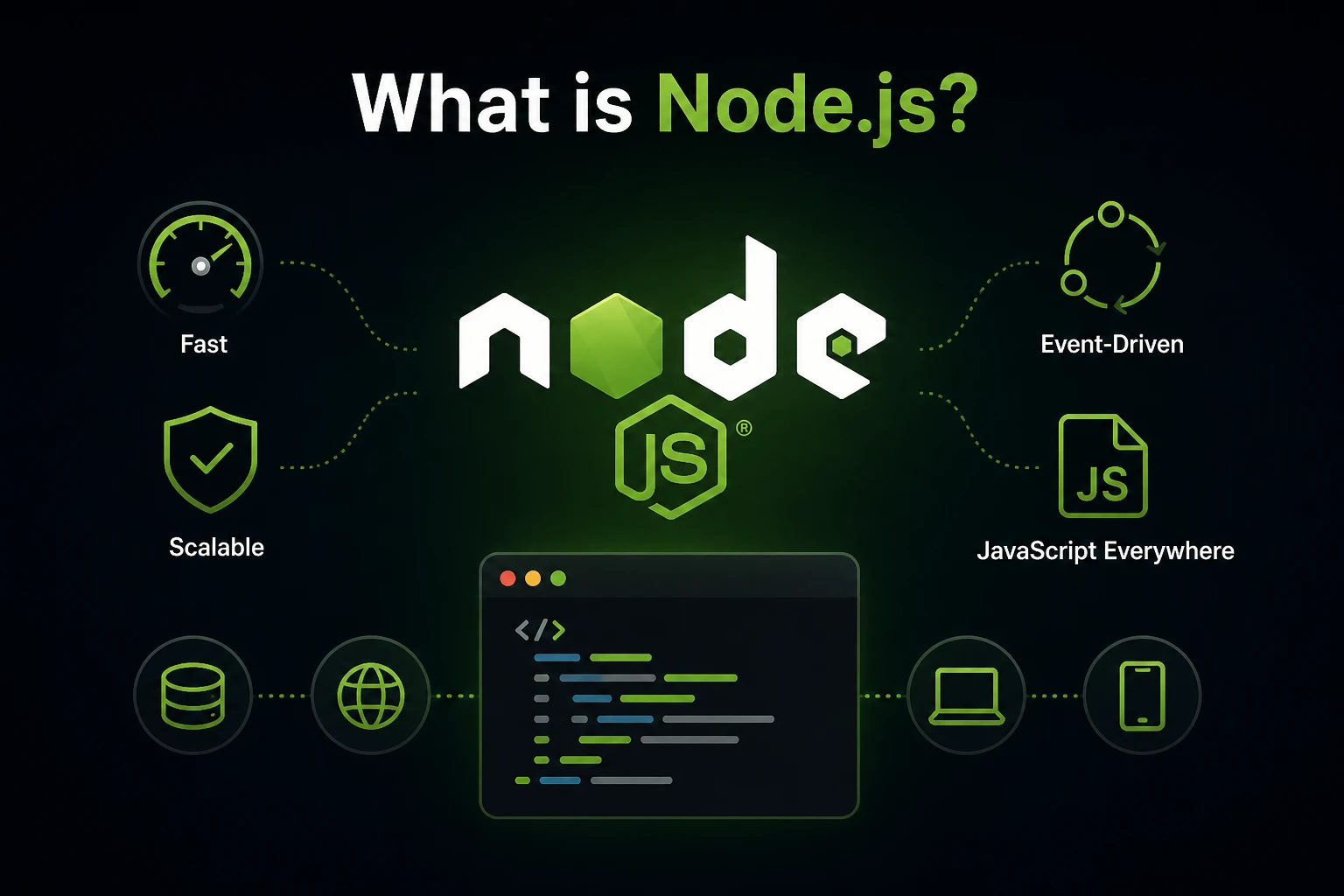
For developers building similar systems, understanding the infrastructure is critical. My article on what is Node.js covers some backend fundamentals, though legal AI systems typically require more specialized processing capabilities.
What This Actually Means for Your Job
Let's talk about the part everyone's thinking but nobody wants to say. If AI is making decisions in hiring, healthcare, finance, retail, and legal work, what jobs are actually safe?
The uncomfortable truth from these case studies is that AI isn't just replacing repetitive tasks anymore. It's replacing judgment. The thing we thought made humans irreplaceable.
But here's what I've noticed after studying these implementations: AI isn't replacing human decision-making everywhere. It's replacing it in specific contexts where decisions follow patterns, even complex ones.
Hiring decisions follow patterns based on past successful hires. Medical diagnoses follow patterns from millions of previous cases. Investment decisions follow patterns in market data. Retail pricing follows patterns in customer behavior. Legal outcomes follow patterns in case law.
Pattern recognition is what AI does better than humans. The decisions getting automated are pattern-based decisions. The ones staying human are decisions involving genuine novelty, ethical judgment, or situations where no pattern exists yet.
So what should you do? Stop pretending AI won't affect your field. It will. Instead, focus on developing skills that complement AI rather than compete with it. Learn to work alongside these systems. Understand their limitations. Know when to trust them and when to override them.
If you're in tech, the path forward involves building these AI systems rather than hoping your current skills stay relevant forever. Check out the AI full-stack developer roadmap 2026 for specific skills that are actually in demand right now.
And if you're building AI-powered applications, understanding frameworks matters. My guide on how to build AI React apps with Vercel SDK 2026 covers practical implementation for developers who want to create these systems themselves.
Key Takeaways: AI Decision-Making in 2026
Companies are giving AI final decision authority in hiring, healthcare, finance, retail, and legal work without human approval.
AI decision accuracy often exceeds human performance but errors still happen and accountability remains unclear.
Most people don't know when AI made the decision affecting them because disclosure isn't required in many contexts.
Pattern-based decisions are being automated first while novel situations and ethical judgments still require humans.
Job security depends on developing skills that complement AI rather than compete with pattern recognition capabilities.